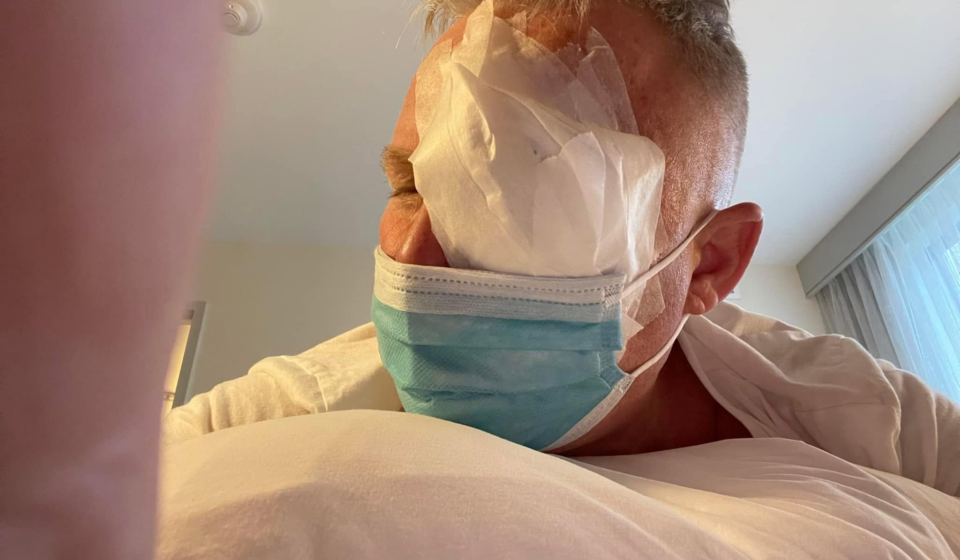

There are losses you can prepare for, at least in theory. Jobs end. Children grow up. Bodies age. Time takes what it takes, usually a little at a time. But eyesight? I never imagined having to surrender that. I never imagined opening my eyes and discovering that the world I had trusted all my life—the faces, steps, shadows, distances, and ordinary objects around me—could suddenly become uncertain.
I was born with a rare condition called Morning Glory Syndrome, a defect involving the optic nerve. It had been there from the beginning, quietly woven into the way I saw the world. I knew my eyes were not perfect, but they were my eyes. I had adapted to them. I had built a life with them. I served in the Army. I jumped from airplanes. I served sixteen years in the Coast Guard. I built a career, raised a family, drove cars, lifted weights, traveled, worked, and moved through life with the confidence that my eyes would continue doing what they had always done.
Until one of them didn’t.
Several years ago, the retina in my right eye detached. That sentence sounds so clinical. Detached. A clean medical word for something that felt anything but clean. A retina does not announce its surrender with a dramatic crash. The world simply begins changing in front of you, and suddenly the eye you have relied on your entire life is no longer trustworthy. Something essential is pulling away inside your own body, and there is nothing you can do with your hands to stop it.
What followed were three surgeries. Three times, I went into surgery carrying the same fragile hope: Maybe this will be the one. Maybe this time the retina will hold. Maybe I will wake up and begin the slow journey back toward normal.
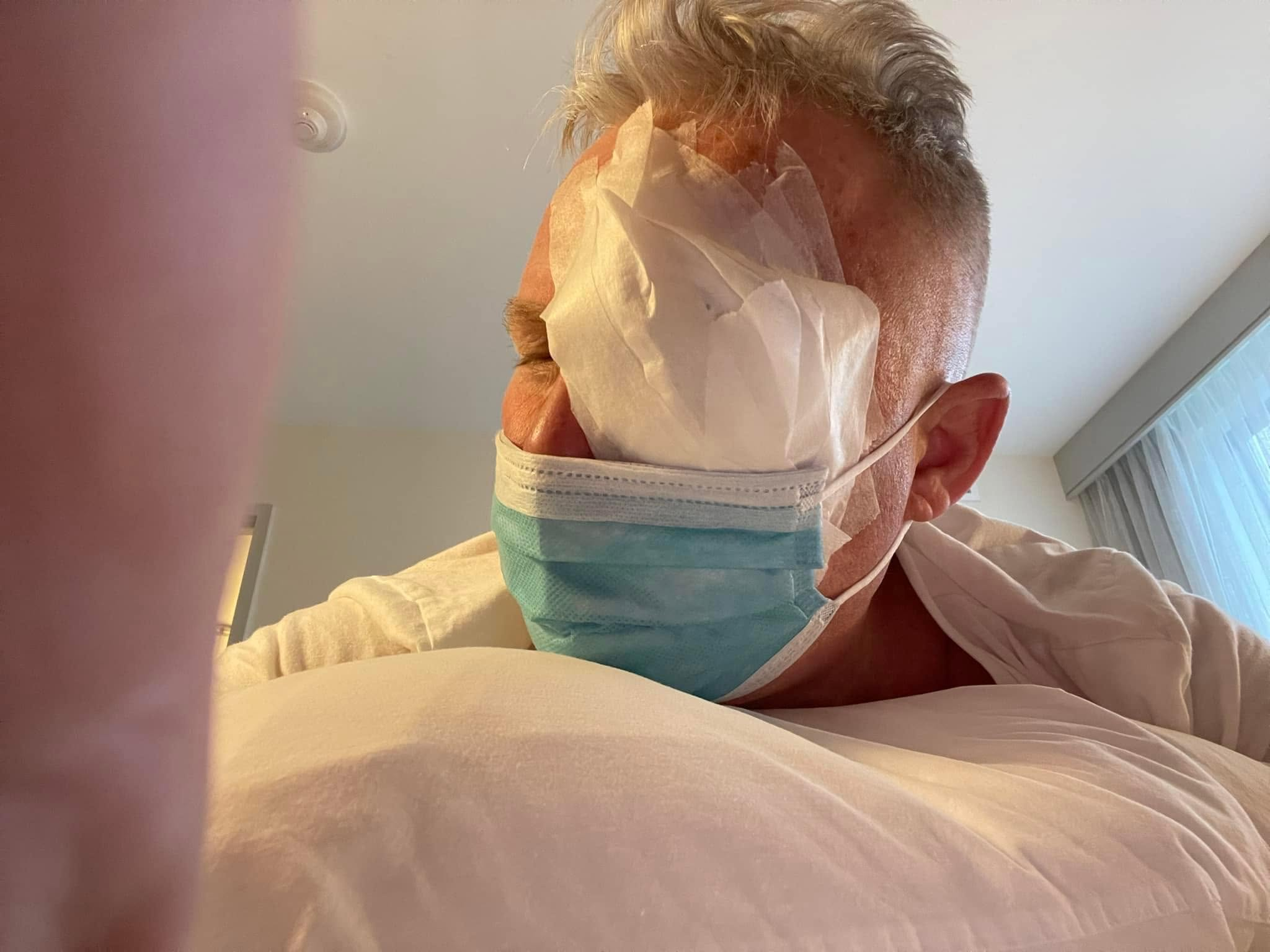
After each operation came the face-down recovery. For two weeks at a time, I had to remain on my stomach with my head pointed toward the floor. A gas bubble had been placed inside my eye, and gravity had to hold it against the damaged retina. The positioning was not optional. It was part of the treatment—a strange, exhausting partnership between surgery, gravity, time, and hope.
Two weeks may not sound like much when you say it quickly. Try living it. Try spending day after day staring downward while your neck aches, your shoulders tighten, and every instinct in your body begs you to change position. Try sleeping that way. Try eating that way. Try measuring your days by discomfort and wondering whether all of it is actually working. The hours did not pass normally. They crawled. My world became whatever happened to be beneath my face—a floor, a pillow, the small area directly below me. I could not simply look up at the room, glance toward a sound, or turn my head freely without remembering that the bubble inside my eye had a job to do.
So I stayed down. I stayed down because suffering felt easier when I could attach hope to it. I told myself that every miserable hour might be buying back a piece of my vision. Every stiff muscle, every restless night, and every moment of frustration might be worth it if the retina would only stay where it belonged. And I did it three separate times.
Even Mellow Got Involved
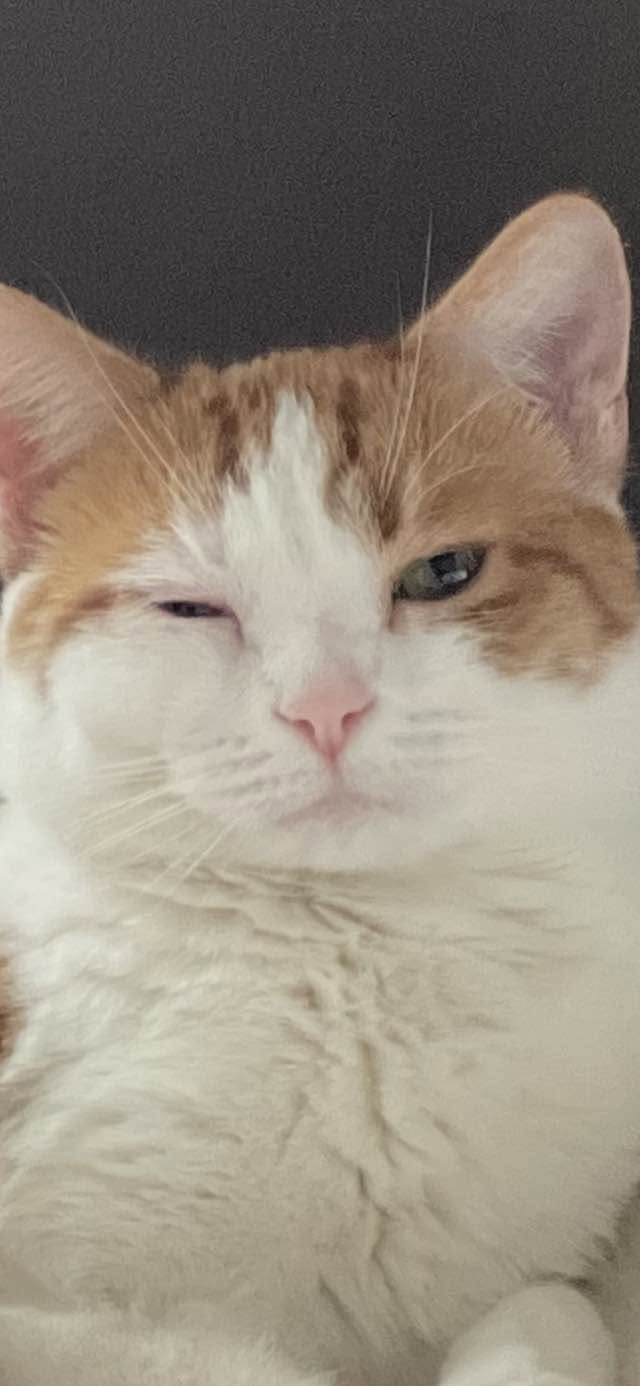
During one of those recoveries, Mellow apparently decided that the situation had become far too serious. A couple of weeks into watching me move around the house with one eye closed, she began sitting near me with one of her own eyes squeezed shut. There she was, calmly looking as though she had enrolled herself in the recovery program. I had endured surgery, gas bubbles, restrictions, pain, and endless hours staring down at the floor. Then I looked at that cat copying me, and I laughed. I needed that laugh more than I realized. Sometimes grace arrives through prayer. Sometimes it arrives through the people who love us. And sometimes it arrives disguised as a cat sitting beside you with one eye closed, reminding you that darkness has not taken away your ability to laugh.
But laughter could not change the medical outcome. All three surgeries failed. Even now, those words land hard. Each surgery had begun with another round of hope. Each recovery required another surrender of comfort and independence. Each time, I followed the instructions and endured the position because I believed I was fighting for my sight. Then came the appointments, the examinations, and the words I did not want to hear: It had not worked.
After the third failure, the doctors stopped relying on the temporary gas bubble. Gas eventually dissipates, and it had not solved the problem. Instead, they filled my right eye with silicone oil. Unlike the gas, the oil does not simply disappear. It remains inside the eye, supporting the retina and helping preserve the structure of the eye itself. The oil helped hold things together. It did not give me my vision back.
Through my right eye, the world became warped and distorted, as though I were looking through a carnival mirror that I could never step away from. Shapes bend. Distances deceive. What should be familiar can appear strangely altered.
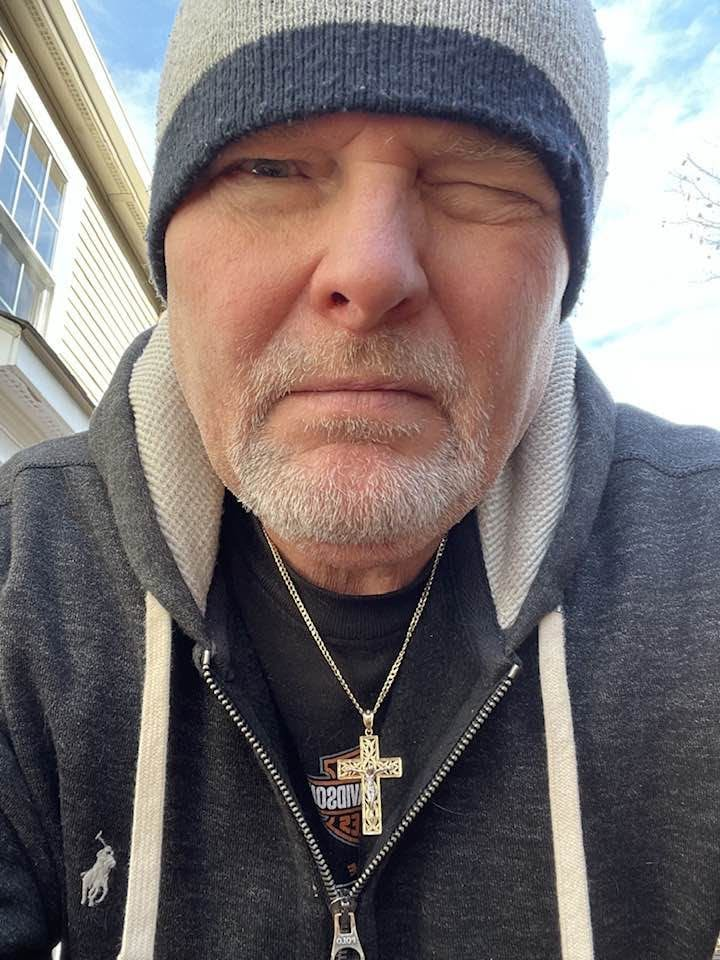
Eventually, I lost approximately 90 percent of the vision in that eye. That is a difficult sentence to write. It is even harder to live.
Losing sight is not limited to what an eye can no longer see. It changes how you exist in the world. Depth is different. Distance is different. Shadows can fool you. Steps require attention. Objects beside you can disappear into the blind area you have not yet learned to compensate for. Movements that once happened without conscious thought become small calculations: Where is the edge? How far away is that step? Did I miss something on my right side? Can I trust what I am seeing?
The world did not change, but my ability to move through it did. That loss carries an emotional weight most people cannot see. From the outside, I still looked like myself. I could stand, walk, speak, smile, and carry on a conversation. But inside, I was learning to navigate a world that no longer arrived in the same way.
Then the problems started in my left eye—the eye carrying nearly the entire burden of my remaining vision. Doctors discovered two holes and a retinal tear. That fear was different. Losing most of the sight in one eye had been devastating. The possibility of losing vision in the other eye reached into a deeper place, one I did not want to visit. What if the darkness kept coming? What if one damaged eye was not the end of the story? What if the other eye failed too?
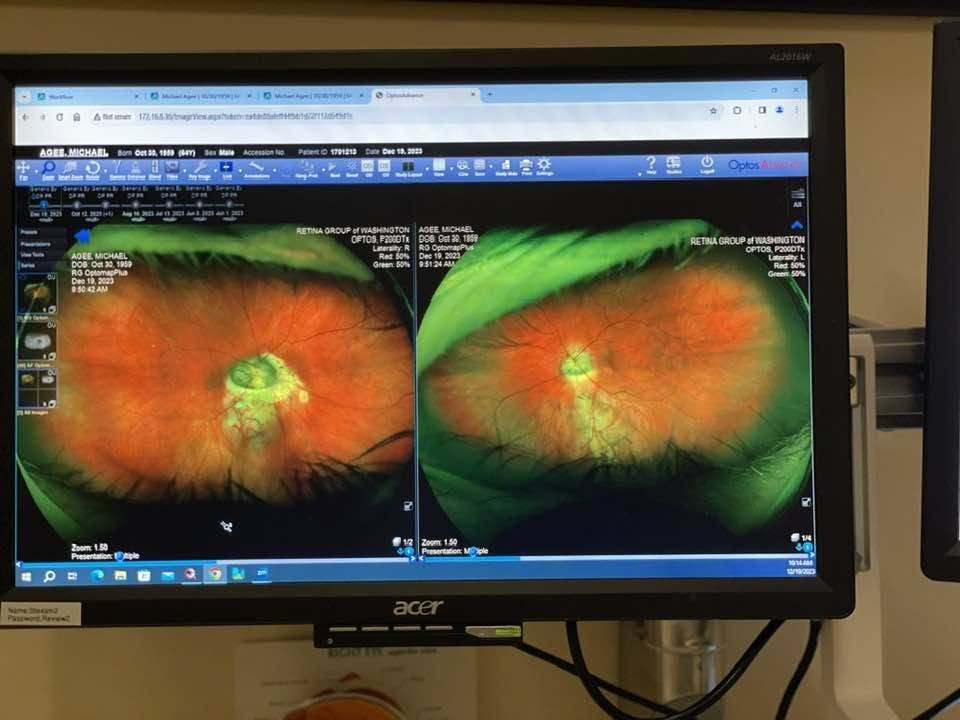

Those are not thoughts a man can simply command himself to stop thinking. They arrive in quiet moments. They sit beside you when the house is still. They follow you into medical appointments and wait in the room while the doctor studies the images.
I would be lying if I claimed that I handled all of this with courage. I did not. There were times when I was angry. There were times when I was afraid. There were moments when I wondered what else might be taken from me.
I had spent a lifetime believing that determination mattered. In the Army, the Coast Guard, federal service, the gym, and everyday life, effort meant something. When a problem appeared, I attacked it. I worked harder. I pushed through discomfort. I kept moving when part of me wanted to stop. That approach had carried me through much of my life.
But I could not order my retina to reattach. I could not discipline my eye into healing. I could not lift enough weight, work enough hours, grit my teeth hard enough, or simply tough my way out of it. For a man accustomed to action, that helplessness was brutal.
I had to place my sight into the hands of surgeons, lie face-down, follow instructions, wait, pray, and accept that the outcome was not mine to command. That kind of surrender can wound your pride. It can also reshape your understanding of strength. I began to realize that some battles are not won by recovering everything that was lost. Sometimes the victory is refusing to let the loss take everything else with it.
My eyesight changed. My vision for my life did not.
I can still love my wife, Thao. I can still care for my family. I can still train, write, remember, laugh, serve, encourage others, and keep becoming the man God calls me to be. I can still see beauty. I may see it differently now, but perhaps I also see it more clearly.
I see how casually we accept the ordinary miracles of our bodies. We wake up, open our eyes, and expect the room to be there. We walk across floors without calculating distance. We step off curbs without fear. We look toward the face of someone we love and assume we will always be able to see it—until something happens that reminds us none of it was ever guaranteed.
I understand now that independence is precious. I understand that strength is not always measured by how much weight a man can lift or how much pain he can hide. Sometimes strength is quiet. Sometimes it is adapting to a reality you never wanted. Sometimes it is admitting that you are frightened and continuing forward anyway. And sometimes strength is choosing not to become bitter.
Faith does not require me to pretend that I am unafraid. Faith is trusting God while admitting that I am afraid. It is standing inside the uncertainty and believing that my life still has meaning. It is accepting that the path ahead may look nothing like the one I planned, while trusting that God has not abandoned me on it.
I do not understand why my eye did not heal. I do not understand why all three surgeries failed. I do not understand why the retina in my left eye also became threatened, forcing me to confront the possibility of even greater loss. But faith is not having an explanation for everything. Faith is continuing to walk when I cannot see the entire road.
I have lost most of the sight in my right eye. But I have not lost my purpose. I have not lost my faith. I have not lost my love for my family. I have not lost my gratitude for the life still in front of me.
And I have not lost my vision.